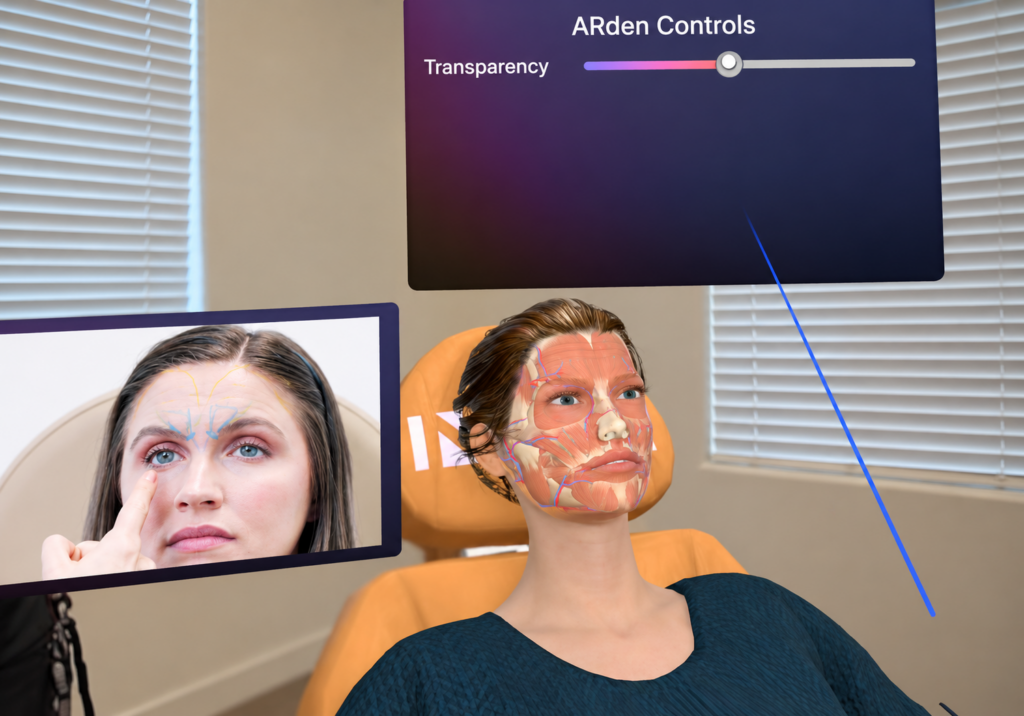
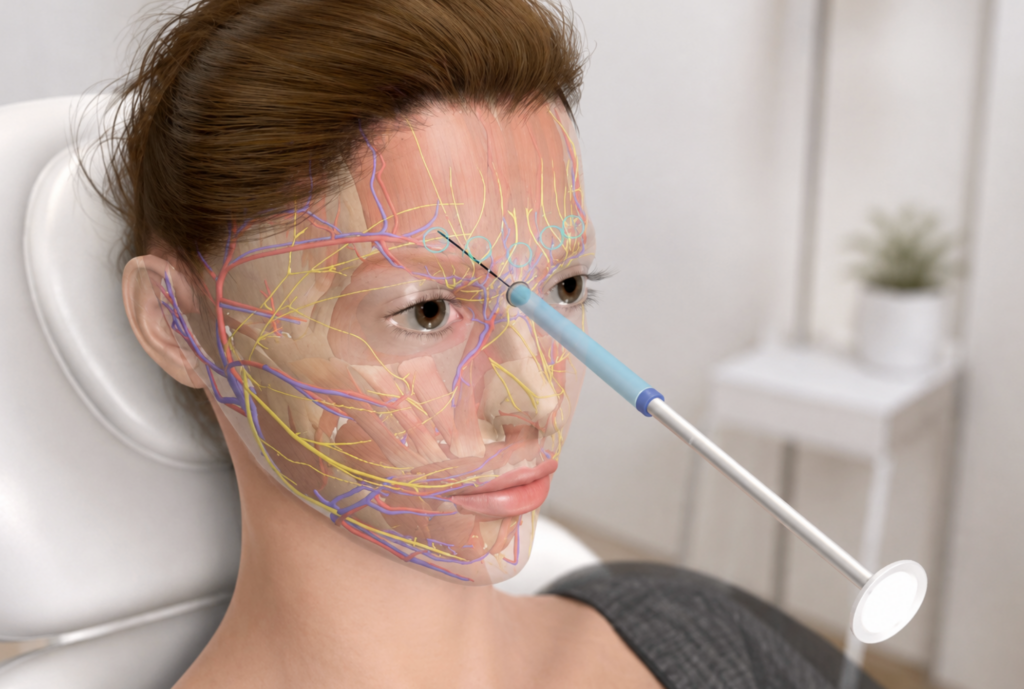
An example of InfuseMed’s immersive clinical learning environment.
Nearly two decades of medical education experience are shaping a new approach to immersive learning that moves training beyond passive content and toward observation, interaction and real-world application.
SALT LAKE CITY — For years, much of professional training has been measured by a relatively simple question: Did the learner complete it?
InfuseMed believes the more important question is what happens next.
Can the learner remember what they were taught? Can they recognize it in context? Can they apply that knowledge when it actually matters?
Those questions are increasingly shaping the work of InfuseMed, a medical education and immersive learning company that has spent nearly two decades translating complex clinical, scientific and product information into learning experiences people can understand and apply.
Now, the company is bringing that experience together around a broader approach to knowledge transfer built to move learners beyond passive consumption and closer to the way people have learned complex skills for centuries: by seeing, trying and doing.
“The biggest change has been the move toward more engaging, interactive learning, along with much higher expectations for measurable outcomes,” said Steve Deverall, CEO of InfuseMed. “It used to be enough to show that someone completed the training. Now, we need to demonstrate retention, proficiency and real-world impact. That matters because if we are asking organizations to invest in more immersive tools, we also need to prove that the learning works and delivers a meaningful return.”
From watching information to experiencing it
The shift reflects a broader challenge in professional education.
Digital learning makes information easier to distribute, but access alone does not necessarily translate into understanding or application. A learner can watch a video, complete a module or advance through slides without developing a meaningful mental model of how that knowledge fits into a real environment.
InfuseMed’s approach centers on closing that gap.
Its SEE → TRY → DO methodology is designed around a progression from expert demonstration and contextual understanding to interaction, repetition and eventual application. Depending on the training need, that experience can incorporate immersive environments, XR and VR, 3D medical visualization, interactive learning, video, simulation and other forms of digital education.
“Immersive learning helps people build a mental model of how knowledge is actually applied,” Deverall said. “The more active, contextual and engaging the experience is, the more likely learners are to retain it and use it when it matters. If someone completes training but cannot remember or apply what they learned, we really have not accomplished much.”
The philosophy is less about using emerging technology for its own sake and more about choosing the right combination of tools to reproduce something technology has historically struggled to scale: learning in context.
An old model of learning, rebuilt with new tools
Long before eLearning platforms and virtual reality, complex skills were often transferred through apprenticeship. Learners observed an expert, practiced with guidance, repeated the process and gradually applied what they had learned.
InfuseMed sees immersive technology as an opportunity to bring more of that experience into modern professional education without being limited entirely by geography, scheduling or one-time access to an expert.
“Over nearly 20 years, we have explored and mastered almost every medium used in medical education,” Deverall said. “What excites me now is bringing all of that experience and intellectual property together to build tools, platforms and products that can fundamentally change how people learn.”
“It is really an old-school-meets-new-school approach, combining the power of apprenticeship and learning by doing with the very best immersive technology. We are orchestrating everything we have learned into a methodology that can be replicated across almost any training need, and we are already seeing incredible results.”
That approach now informs InfuseMed’s work across custom learning experiences for health care and life sciences organizations, as well as the development of its own training platforms and products.
Making complex information connect
One example of InfuseMed’s ability to translate complex subject matter has reached an audience far beyond a traditional professional training environment.
A 3D fetal development animation created by InfuseMed has been viewed more than 20 million times on YouTube, offering a visible example of how complex medical information can connect with a broad audience when it is made clear and engaging.
The subject matter and format are different from immersive clinical training, but the underlying challenge is the same: turning complexity into an experience the learner can follow, understand and remember.
For InfuseMed, that challenge has become a connecting thread across its work.
The company is continuing to develop immersive learning solutions across medical education, clinical training, product education and other complex learning environments, with a growing focus on interaction, repetition and measurable learner outcomes.
As the technology used to deliver education becomes more sophisticated, InfuseMed believes the standard for effective learning should rise with it.
At its core, InfuseMed remains true to its roots and focused on one goal: accelerating the transfer of knowledge into learning mastery and turning mastery into confident performance.
About InfuseMed
InfuseMed creates immersive learning solutions designed to make complex medical, scientific and technical information easier to understand, experience and apply. Drawing on nearly two decades of work across medical education, 3D visualization, XR/VR, interactive learning, simulation, video and digital experiences, InfuseMed works with organizations to transform complex knowledge into more engaging and effective learning experiences.
Through its SEE → TRY → DO approach, InfuseMed is exploring how modern technology can bring the principles of observation, interaction, repetition and application into scalable professional training.